My Blog List

Thursday, January 13, 2011

Jeff Somers Interview

    Readers respond to powerful stories, to inventive stories...to Jeff Somers stories. The power and pace he brings to the pages of his novels, marks him well as one of the foremost authors of his genre. His fans are legion. Viewers of his videos can't wait for the next appearance of a whiskey bottle, glass and guitar lead in.

   His wild sense of humor seems on the verge of breaking loose every minute of the day.

   Have I been looking forward to his visit to The Novel Road? Heck yeah! Having read his books, and watched his video, I can tell you Jeff Somers is pure entertainment.

I'm pleased to welcome Jeff Somers to The Novel Road

Me: A world gone mad, replete with post apocalyptic semi-dead in a land of midnight’s midnight… So you live in New Jersey?
Jeff: Oh! Jersey humor! I LOVE JERSEY HUMOR. Lord knows I never hear jokes about Jersey. I can see the tone you’re trying to set here: Erudite, sophisticated, worldly.
    Not just living in New Jersey, I was born and raised in New Jersey. I currently live just 5 minutes from the literal spot of my birth, a sawdust-covered tavern floor where, legends say, a stain remains to this day, resistant to any type of detergent. I was also educated solely in New Jersey, first at overcrowded public schools, then at St. Peter’s There but for the Grace of God Academy, then at Rutgers University. Here’s something I wrote in a short story a few years ago about St. Peter’s There but for the Grace of God Academy:
    In the fall my brother Yan and I matriculated into high school. Our parents maintained a long arm and enrolled us in St. Peter's There But For the Grace of God Academy, which was a pseudo-religious-slash-military establishment stressing Latin and self-mutilation. We awoke one fine September day to find the ancestral home surrounded by Jesuit Commandos, who piled us into an armored truck along with several other frightened boys. Yan and I cheered our fellow kidnap victims by singing The Sound of Music (Yan's voice indistinguishable from Julie Andrews') and we plotted a brisk escape from the truck; but once the rear doors were thrown open Yan and I were inexplicably ratted out by our fellows. My brother and I entered St. Peter's as prisoners, and spent our first weeks there being beaten on a daily basis by a burly priest named Father Hump, until we could speak perfect Latin, although we could no longer remember our own names.

    St. Peter's There But for The Grace of God Academy was designed to instill in its charges a sense of discipline and a love of God. Towards the first goal, we were enrolled in classes such as Sewing Leather Sneakers for Nike Inc. and Kathie Lee Gifford Clothing Line 101. These classes taught us to be patient, to endure hardship, and to manage complex and minute tasks with broken and bloodied fingers. Towards the second goal, we were beaten unto insensibility, at which point we often hallucinated that Jesus came down from heaven to deliver us from our living hell, which certainly made us love him....until we awoke for Cooking for the Jesuits 101 at 5am the next morning, an advanced class that often resulted in failing grades and thrown food, at which point we started resenting Jesus all over again.

    Yan and I look back on our years at St. Peter's There But for the Grace of God Academy fondly, of course, or at least Yan would if he had not perished in the Great Failed Escape of 1989 (or so I thought), in which thirty-one boys lost their lives attempting to tunnel under the fences surrounding the campus. His loss was doubly senseless, since we were set to graduate later that same year. Perhaps the looming specter of the final examinations (which are rumored to have cost more than one senior his life) had driven Yan to this extreme, or perhaps it was simply the girls academy situated across the way from St. Peter's, where nubile and uniformed young women often spent the hot afternoons washing cars in cut off T-shirts.

    At any rate, I did manage to graduate with only a few broken bones and permanent scars in the spring of 1989, and as I said I look back fondly on my years at St. Peter's; so fondly that when I returned some years later to burn the place to the ground in a blaze so hot it liquefied windows in surrounding buildings for miles, I shed a tear or two as I sipped a strong Martini on an overlooking hillside. Or perhaps that was just the dry air and the heat.
So yes, I live in New Jersey. I know diners, I know traffic circles, I know the New Jersey Turnpike exits like I know my own skin. It is the greatest place in the world. Or so I imagine, as I’ve never left it.

Me: From essayist to dystopia, you’ve proven your versatility and talent. Give me the title  and story line for a Jeff Somers YA novel.
Jeff: Let’s call it The Really Cool Kids who Drank and Smoked a Lot. It would involve an accidental homicide at an unchaperoned party, furtive attempts to cover it up and displace the body. The kids would swear secrecy and eternal silence, but one by one would start killing each other off as they get paranoid. In the end, one of the kids would survive, completely free of suspicion. As part of the marketing, we’d insinuate it’s actually autobiographical. We might have to kill a few people to make it look good.

Me: Avery Cates is a unique dystopian archetype. How did he evolve?
Jeff: Indiana Jones. Seriously. My brother and I had a long discussion once about how Indiana Jones was one of the best movie heros evah because he got his ass kicked. In a lot of action stories, the hero is just supernaturally capable. They take punishment and shrug it off and come roaring back, maybe with some dirt and blood painted on to make it look dramatic. It’s boring. We liked Indy because when he got beat up, he looked like he was getting beat up, and he had bruises and scabs. He looked like a guy trying desperately to avoid physical pain, you know?
    So when I started working on The Electric Church all those years ago, I wanted the character to be tough and mean, but I wanted him to be human. He avoids pain, because that’s what people do. He’s tough and mean, but it’s only because he knows that any sign of weakness will get him killed. And he feels that pain, buddy.
   That’s the key, I think, to Avery, aside from his father-son issues that keep manifesting as a doomed desire to save and protect people coupled with a conviction that things Used to be Better, you know? Avery feels that pain, and tries to run away from it.

Me: Hollywood and Jeff Somers. I hear your suggestion that Justin Bieber play Avery Cates in the film to come was shot down, though Sean Ferrell is still considering an offer to write the screenplay. Any other news on the film front?
Jeff's just finished custom home.
He designed it himself...
Jeff: Ferrell’s screenplay was bosh. He tried to go all Charlie Kaufman and wrote himself into the story as some sort of observing angel, floating around glowing or something—it’s unclear. He gave himself all sorts of funny lines commenting on the action, too. By page 350 of the screenplay it’s really just Ferrell sitting at a park bench chatting with the audience. It goes on for hundreds more pages. At one point he starts singing “Pennies from Heaven” while dressed as a clown in the moonlight. A CLOWN IN THE MOONLIGHT. Think about it.
   My own casting suggestions involve me, playing mutliple characters. My emails and phone calls are no longer returned.
   The news on the film front is that there is, in fact, still a film front to get news about, which is pretty damned exciting. I know they’re very close to a first draft of a screenplay. Beyond that it is blissfully out of my control, and I like it like that.

Me: Talk about the day you became a Wikipedia star?
Jeff: “Star” is perhaps a strong word. More accurately “The day I actually showed up on Wikipedia.”
   Plain and simple, whining works. Every now and then I wake up wearing someone else’s pants and I stand in the bathroom, urinating, for about fifteen minutes, and I scowl at myself in the mirror (the whole bathroom is mirrored, for obvious reasons) and think, today I will see what I can get other people to do for me. This was one of those times. I posted on my Blog that I wanted a Wikipedia page. I’d created one for myself several years ago, back in the Wild West period of Wikipedia, but it had been deleted. So I began complaining.
   People got right on it, but it was like that Monty Python bit from “Holy Grail”: They set up a page, but it was deleted for me not being notable enough. SO someone put up another page with more details and that was deleted. And then another, and another deletion, and then finally the fifth or sixth one stuck. I was pretty proud of myself for a while, then I saw this episode of Deep Space Nine, which is just as detailed as my own page: Damn.

Me: This question, courtesy of Jeff Hall : “I'm a shortstory-ist. Writing a novel is like a crazy long marathon, only harder. How do you maintain a clear sense of that first passion that inspired you throughout a 200K word journey?”

Jeff: First of all, 200,000 words? Holy crow, man, what kind of books are you writing?
   I’ve never had this problem. For me, stories are as long as they are. Sometimes I write 2,000 words, sometimes 80,000, but I rarely struggle to extend something. I tend to think that if you’re struggling to write your way into official novel territory, maybe what you’re writing isn’t a novel after all. What usually happens with me is I keep writing a story and then I get to the end, I check the word count, and then I decide what to call it.
   One thing I think I do almost unconsciously is break the plot into sections and treat each one like a short story, in a way. It’s like that time you decided you were going to eat an entire bucket of fried chicken in one sitting: If you just keep going eventually your jaw locks up and you die of heart failure. But if you treat it like sixteen normal-sized meals, you’ve got a fighting chance!
   As for inspiration, the answer to that question, no matter the context, is whiskey. Scotch, to be more specific. Glenmorangie 10-year to be even more specific in case anyone out there likes to mail bottles of booze to authors.

Me: Lunch with you and any author (except Sean) you choose, from throughout history or today, and why.
Jeff: Lunch with Ferrell! The mind boggles. I’ve seen the man drink. It’s disgusting enough. Who would want to watch him eat? He reminds me of BrundleFly.
  Myself, of course, forming a stable time loop that in essence grants me immortality.
  My god, I need to have a genie appear and offer me wishes. I would crush that scenario. I’d end up ruling the universe and the genie would be weeping in a corner, totally destroyed.
  If I have to get all serious about a question involving the ghosts of dead writers, I have to ask if I can bring recording equipment with me, so I can steal ideas. 

Me: Publishing is going through an evolution right now. Talk about how this has or will affect you.
Jeff: As an author, it hasn’t really. I haven’t been publishing long enough to gas on and on about the good old days. I used to write on a manual typewriter, but that was part affectation and part being born before computers were everywhere.
   Well, I’m lying; here’s one way things have changed for me as an author: The long tail. I can think of dozens of writers I read when I was a kid in the 1980s who no longer have any presence whatsoever on bookshelves. Regardless of where they went career-wise, the books I read and loved 30 years ago cannot be found on a real-life bookshelf, and back in The Day that would be the end of it. People write books, try to sell them, and then fade away if they don’t sell enough.
   Except today that isn’t necessarily true. There are so many options, so many sales channels. You can self-publish, re-issue your old books. People can find old copies of your books online pretty easily. We’re inching towards a place in history where “out of print” doesn’t mean anything any more, and that’s pretty amazing. I’ll bet there are a lot of writers throughout history who managed to put out a book or two and then faded into obscurity who would have been delighted to have the Internet around to keep their books available, or to publish new material if publishers were uninterested.
   That, and the fact that my last publishing contract required me to wrestle a bear or forfeit my advance. This was new.

Me: Talk about life experience. How important it is to an author?
Jeff: It’s as important as anything else. I’m reminded of a quote from Laurence Olivier when he was working on The Marathon Man with Dustin Hoffman. Hoffman was a method actor playing a man who’d been awake for days bing tortured, so he’d stayed up for days straight prior to filing th scene to get some verisimilitude. Olivier saw him and said something along the lines of “My dear boy, why no try acting?” The thing about writing is, you are making shit up. I don’t care what you’re writing, unless it’s nonfiction, you are making shit up. Yes, writing what you know will capture honest details that will ring true, but generally speaking I don’t hesitate to write about things I’ve never actually experienced, because I can make up the details, you know?
    Life experience is the ultimate inspiration. You go somewhere, you do something, it leaves marks on you, and one day you see something else and it clicks with this old memory and you have a story in your head. But never, ever forget that you’re a writer. You. Can. Make. Shit. Up.

Me: Tell us about your agent and why the match is perfect?lady psychiatrist
Jeff: Why? Did she make you ask that? Are you working for her? Is she having me followed again?
    My agent and I are perfect because when I was sending out query letters a few years ago trying to entice an agent, she’s the only one who wrote back that my letter made her laugh uproariously. She then mentioned that my sample chapters had some “disturbing” copy-editing errors, but that she wanted to see the full novel anyway. I knew she was perfect.
   Plus, when we meet to discuss business we meet in bars, and she buys me whiskeys until I fall off my chair. That’s how you run a writing career, folks.

Me: Talk about editing your work. What advice can you give other writers on the editing "Stop line"?
Jeff: I don’t edit much, honestly. I write one draft. I take that draft and stare in horror at the awfulness of it, then I do a line-edit. I read the whole thing over and revise as I go. That’s it. I stop. I’ll do more revision when I get feedback from people, depending on how good or bad the feedback is, and then I stop for reals.
   I don’t think anything I’ve ever written has ever improved due to a third or fourth or whatever revision. I think the event horizon for diminishing returns in the revision/editing process is much closer than you think, and very quickly you are grinding the gears. I know people who have been working on one book for two decades. Is the 198th version significantly better than the 100th, or the 3rd? I doubt it.
  So my advice: Stop editing, sooner rather than later.

Me: Give me a two sentence “Hook” for “The Terminal State”.
Jeff: Avery Cates gets pressed into the army, has augments implanted in his brain that allow people to control him, and then gets bought out of the army by the two men he wants to kill more than he wants to kill anyone else: Canny Orel and Wa Belling. Hilarity ensues!

Me: If Jeff Somers ever wrote a Non-Fiction book, what would the subject be?
Jeff: Probably "Stop Drinking Before You End Up Like Me". Or, possibly, 
 "Why Wearing Pants in Public is Largely Unnecessary".

Me: You have some great fans in your blog’s forum. The “Official Jeff Somers Thinks Too Much of Himself Forum”, how did it come into being?
Jeff: Well, one day I was sitting in my office, wondering if my hangover might be cured by a good old-fashioned forced-vomit, wondering where my pants were, wondering when, exactly, my office had come to reside in someone else’s house, and wondering, of course whether the people yelling and pounding the locked door to the office were friends or foes, it occurred to me that I did not have a forum where people could post about how cool I was. So I created one.

   Creating it myself was a bad idea. The forum gets spambots constantly and has been compromised a few times, because I am lazy and incompetent. But no one else was volunteering to create one, so I took care of bidness, as they say. Hence the title of the forum, because, really, did I really think the world needed an online forum to discuss me? I dunno. Discuss.

   I don’t actually check it much, though I should, because I think the forum-dwellers enjoy provoking me into saying things I shouldn’t. I dive in once and while. I have organized my “Street Teams” via the forum; volunteers who get promotional stuff from me (stickers, bookmarks, etc) and agree to distribute them round the world to promote Cates when a new book comes out. That’s been a blast.

Sean Ferrell Interview

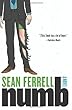
NUMB by Sean Ferrell   I have an incredible list of authors that are gracing The Novel Road pages with their wisdom and humor. 

  All, from the debut authors to the Mega-Successful, are so incredibly talented in the art of the written word.

  My guest today, Sean Ferrell, offers me personally a chance to talk to an author whose work I absolutely admire and (please forgive my arrogance) you should too.
 
  It’s rare to find anyone that walks the Literary line, to create a work of mass appeal. Sean is one of those rare people. His novel entertains, as well as carries the heart and mind from first word to last.

  He lives with his family in Brooklyn, New York

 
  I’m pleased to welcome Sean Ferrell to The Novel Road and in case anyone is wondering… I’m a fan.
 
              **********************************
  

Image of Sean Ferrell
Sean Ferrell

  Me: I’m a huge fan of your novel, “Numb”. Your short stories "Billy Echo" and "Building an Elephant", which won the Fulton Prize from The Adirondack Review, have a "Literary DNA" that shows itself in "Numb". Talk about your past work, and how it has helped build you into the author you are today.


Sean: The term “literary” gets a lot of flack and a lot of respect, depending on who is doing the talking. In my mind it's just another genre, one that a lot of authors could be placed in if there weren't such an overwhelming marketing desire to label a book once and be done with it. It is often a label put on a book when people don't know what else to call it. I know powerfully good mystery novels that are literary. I know literary novels that are wonderful mysteries. And sci-fi. And horror, and women's lit, and YA, and on and on. The fact that my novel doesn't focus more on an element like the mystery of Numb's past, or the science/medical causes for his condition, may lend weight to the idea that it is “literary.” But you also mention Billy Echo (which floats in a magical realist stream) and Building an Elephant (is it sci-fi, magical realism, I don't know) and I think the main thing they have in common with Numb is that I was concerned with how the story was told as much as telling the story. I think when a writer is equally concerned with how the story is told as much as the story itself, that is when you find “literary” writing. I am thinking of books that are equally concerned with word choice and language, with new turns of phrase and putting words together in a way that is “just so.”

I think of it in the way that the musician Robbie Robertson once described his approach to writing music. He said that it never occurred to him to take a standard blues progression and use it in his music. He said that he thought it was his job to come up with his own phrases and licks and that he was shocked to meet older blues musicians who happily admitted to using other people's inventions in their music.

View Image
Sunste Park, Brooklyn
And I think that all writers, to some degree, have the literary lurking in their writing. It's just a matter of scale, the amount of focus they give to the telling in balance to the story, and there are certainly those who push it so far to the telling that some readers think “literary means no plot.” But as I said, I've seen many a great “genre” book that was clearly written with one eye on plot and one on the telling. Right now I'm reading Lost Dog by Bill Cameron, and you can't tell me that his control of voice and masterful eye for details of life, and wonderful way of illustrating those details, isn't literary. I'm laughing at this right now, because I know that Bill bristles at the greater respect that “literary” types get. He'd probably slap me for saying he's got a bit of the lit-rah-chure in him.


Me: What was the first thing you ever wrote that told you “I can do this?”

Sean: My first holy-cow-comma-this-is-working piece was a short story entitled ,“The Phrenologist's Collection.” It was the last story I wrote while in graduate school, and it was the first that felt like it was really mine. Up to that point I had written a lot that felt forced. I was trying to write in a way that would be accepted and encouraged. I didn't trust my own voice. “The Phrenologist Collection” was the one that told me I was finding my voice.


Numb: A NovelMe: Give me a two sentence “Hook” for your Novel.

Sean: Numb is the story of an amnesiac who wanders into a circus and discovers he can't feel pain. This “talent” leads him toward celebrity and self-destruction.


Me: You show a tremendous connection to your subject matter, as evidenced by your crisp plot and characters. Talk about your characters and how they crystallized in your mind?

Sean: I live with my characters chatting in my head for a long time. A lot of what I write doesn't make the final cut, but it's necessary to know them. Numb started as a man telling me about his morning routine, his cleaning of new wounds and working to keep old scars from tightening up. Mal appeared when Numb walked into the circus. He quickly demanded attention and was angry when he couldn't get it. Hiko appeared when I began to think of her artwork—I worked my way backward to her, starting with her work and finding my way back to the woman who made it. Emilia... who doesn't long for a little bit of Emilia in their life? And who doesn't fear it? In the end I get to know them by not forcing anything out of them. I write to discover what they do, not to talk about what I think they did.


Me: You get to have lunch with any author, from throughout literary history or present. Who would it be and why?

Sean: This is a horrible question, because who can I leave out? I choose Pynchon because I'm sure he'd order the entire menu. No, I choose Vonnegut because I'm sure he'd order something that used to be on the menu and then point out that it's no longer on the menu and so it goes. No, wait, I choose Italo Calvino because he'd order something the restaurant didn't realize was on the menu. Or maybe Margaret Atwood, to see her order something that should be on the menu. Or Ralph Ellison, to watch him choke down something that should never have been on the menu. No, Hemingway, because he'd eat at the  bar. Or Faulkner, just to have drinks.

Image of Sean Ferrell
Me: I read an interview you gave on Writers on Process  . You had me wondering about how you wrote on the subway, in long hand?

Sean: Short answer: uncomfortably.

Yes, I used to do this. My process changed after I wrote my third novel. It had to because I was getting novels out but not in a format I could pass to my agent or editor. Having two-hundred thousand words in cryptic Seanskrit does me no good. Now I have a laptop that I work directly into. I still miss my longhand process. If I ever find a million dollars on the street I'll go back to it. That is an invitation for someone to give me a million dollars.

Me: Talk about editing your book. How did you know when to stop? What advice can you give other writers on the editing "Stop line"?

Sean: Keep going over it again and again, but stop before you lose your sanity. Put it down for a long time and come back to it later. Write another book before your final edit. Or don't. It's your book, you know what it needs. Be honest with yourself, especially the scary “I don't want to have to work on that part” stuff. The stuff that scares you is the heart of your work. Every book is different. Don't measure how much work this book will need based on how much the last one needed. Every writer is different. Don't measure how much your work will need based on how much your friend worked on their book.
Go to fullsize image

Me: Tell us about your agent and why the match is perfect?

Sean: What can I say about Janet Reid that hasn't already been written on the men's room wall of the Old Town Bar? She laughs at all my jokes, whether they're funny or not. She knows when to kick me in the kidneys. She's not afraid to have one too many rounds. She is viciously protective of her writers. She is a better evaluator of work than she gives herself credit for. She is unafraid to do what terrifies me.


Me: This question, courtesy of Jeff Hall: “I'm a shortstory-ist. Writing a novel is like a crazy long marathon, only harder. How do you maintain a clear sense of that first passion that inspired you, throughout a lengthy word journey?”

Sean: If something feels like a novel and then partway through it loses steam and you feel like you simply can't get back to it unless someone puts a gun to your head, why are you working on it? Work on something else, come back, or don't. I stopped working on my second novel to write all of my third, and then returned to my second. I thought I'd abandoned it because I'd lost my interest, but I did return to it, refreshed, and churned out another thirty thousand words to finish it.

You will know when a story is a novel. I knew with Numb. Up to that point I had only written short stories, and I assumed Numb was another. Suddenly he was going into a lion's cage to wrestle a circus lion and I realized that when he got out he would be going somewhere else, that what would happen in the lion's cage was the beginning of his story, not the end, and I took a big gulp of air and said to myself, “Holy shit, is this a novel?”


Me: If Sean Ferrell ever wrote a Non-Fiction book, what would the subject be?

Sean: “How to be Unsuccessful at Avoiding Work: A Multi-step Program.”

Seriously, I think that if I ever wrote a book of non-fiction it would probably be something incredibly esoteric and academic involving nudity and Star Trek.
View Image


Me: The publishing world is changing. Share your thoughts on what you think these changes may hold for authors.

Sean: More heavy drinking, worry, stress, opportunity for self-flagellation. You know, more of the same, only with faster download speeds.


Me: I hear Jeff Somers has sworn off alcohol, become a vegan and that you and he can be found wondering the city streets at night singing songs from "West Side Story"... Care to comment?

Sean: You've got some of the details mixed up. While on a bender, Jeff was found on the West Side swearing. He was wearing nothing but a sandwich-board advertising a neighborhood cooperative organic garden project, of which he knew no details when questioned by police, referring repeatedly to his sandwich-board as his “wash-n-wearables.”

Seriously, Jeff is a talented and good friend, and if it weren't for our mutual restraining-orders against each other we would probably get into a lot more trouble together.

Me: Can you give me your “must read” list?

Sean: I shy away from “must read” as a phrase. The contrarian in me immediately responds to “You simply MUST read/see/eat this” with “I'd rather not.” This attitude drives my mother crazy.

So “must” read, no, but I will list some authors I've been enjoying lately. I already mentioned Bill Cameron. There's also Marcy Dermansky, Colson Whitehead, Thomas Pynchon, Jess Walter and that rapscallion of screen and stage, Jeff Somers.
  

Go to fullsize image

Tuesday, January 11, 2011

Doug Merlino Interview

Book Launch Alert! In Stores January 5

The Hustle: One Team and Ten Lives in Black and White  

   Have you ever considered the last episode of a TV show? The show you followed, season after season, before it met its Nielson doom?

   The story and characters just end.

   In real life, our lives and events are seldom experienced alone. Friends, family or strangers in the background are misted in recall, but they are there. Then the personal scene ends…

   Or does it really ever end?

   My guest today on The Novel Road is the talented debut author Doug Merlino. His book, “The Hustle”, picks up where a time in his past ended, only to begin again. His view of the misted edges of memories are brought clear and crisp into today in the form of the stories of individuals that made up a time and place that was frozen in promise.

  Doug paints a timeline vividly, in fact and circumstance, to unveil twists and turns, sadness and joy, conscience and tragedy. In stirring detail, he provokes thoughts we can each share and roads left untraveled. Doug shows there is no done and done, but days ahead for all who touch our lives.

  A journalist and writer, Doug has contributed to or worked at news organizations including Slate, legal Affairs, Men’s Journal, Wired, The Seattle Times, the Budapest Business Journal and the PBS show Frontline/World. He received a Master’s degree in journalism and international affairs from UC Berkeley.

   Originally from Seattle, he now lives in the Hell’s Kitchen neighborhood of New York City with his wife.

**********************************************************************
Merlino skillfully weaves the personal biographies with the biography of a city that relegated blacks to neighborhoods that were segregated and poor, to the margins of economic life, to public schools that were overcrowded and underfunded. The book’s precise focus enables troubling considerations of the role of race and class in America.” - Kirkus

********************************************************************** 
  
 I’m pleased to welcome Doug Merlino to The Novel Road…
Doug Merlino
Me: Your novel "The Hustle" is a great story as well as in depth article on social and racial stratification in Seattle in the mid-80's. Was it difficult to step back into your past when you researched "The Hustle"? 

Doug: It ended up being a lot more difficult than I expected. Because my background is in journalism, my original approach to this book was in the manner of a newspaper reporter – I thought I’d go, find the guys from this mixed interracial basketball team, and write about them in an “objective” manner. The joke was on me. First, I found that reconnecting with people I’d known as a kid inevitably brought me back to that era and the feelings and insecurities I had as an adolescent, which I thought I’d long packed away. I also realized that trying to write this story from a detached, “journalistic” remove simply drained the life from it. These guys were my friends, and many have gone through hard times in their lives. If they were going to dig deep, I needed to make a reciprocal effort.

   On a practical level, that meant exploring my own past. For example, I went to private school from 5th grade through 9th grade, and then left to go to public school. I always had mixed feelings about private school, but could never really articulate where they came from. As I worked through it while I was writing this book, I realized that my unease came from a fundamental split between my parents. My dad, who grew up in an Italian-American family in Seattle, never seemed comfortable with me going to school with a bunch of elite rich kids. My mom, on the other hand, didn’t have that history and always seemed proud that I had gained admission to what is generally considered the best school in Seattle. This split was then reflected in my school performance, which swung between stellar and abysmal. Once I started coming to terms with some of these facts about myself, my interviews with my teammates went to a much deeper level as well. But going back and analyzing your fourteen-year-old self is not always pleasant.


Me: Talk about the characters from your past. Were they all supportive of your project? Awkward moments?

Doug: The characters in the book are from two distinct groups – white guys who went to Lakeside, an elite private school in Seattle, and were from either the suburbs or the wealthy enclaves of the city, and black guys who grew up in Central Seattle. One guy, Eric Hampton, bridged both – he grew up in Central Seattle but began at private school in the 5th grade, the only African American in our class of thirty-two.

   I’d lost touch with every single guy – I started this at age 30, sixteen years removed from the team. I was actually surprised at how welcoming all the guys were, which I attribute to the impact the team had across the board. It left a mark on every single player, and I think there was a feeling that participating in this book was one way of moving forward what had been started in the 1980s.

   To give one example that really shocked me, one of my teammates, John “JT” Thompson, had pretty much disappeared when I first started trying to find him. He’d been a very popular member of the team, but had gotten involved in street life soon after our season ended. I sent letters to a few addresses I found in his court records, explaining what I was doing and that I’d like to see him. He called a couple days later and was extremely enthusiastic. When we met, he told me that our mixed-race basketball team was a highpoint of his life, a time he felt part of a larger “family” and that people really cared about him. It was obvious he really wanted to feel some of that camaraderie that had been stripped from his life in the intervening years.

                           ************************************

“A thoughtful, perceptive, and moving chronicle of the journey from adolescence to manhood.” - Booklist
                          ************************************

Me: I've had a ton of authors for guests on the The Novel Road of late from the Pacific Northwest. It's the rain isn't it? Keeps you indoors writing, waiting for the skies to clear?

Doug: Yeah, there’s something about the place – water, trees, mountains, rain, and the oppressive grayness that drapes it about nine months a year – that seems to encourage introspection (grunge really does sounds like the Pacific Northwest put into music). There’s also mix of countercultural values – everything from lots of vegans to being the cradle of the riot grrl movement, and on and on – with the world-dominating ambition of companies such as Microsoft, Amazon.com and Starbucks. I think a lot of creative types from Seattle feel pulled between those two extremes and some ambivalence about both.

   I actually have a really hard time writing anything decent when I’m in Seattle – I wrote this book while living in New York and flying out to Seattle to do research. I think I needed the distance, and I like the feeling of being just another writer in New York bringing his lunch pail to work every day and putting in the hours.


Me: You get to have lunch with any author from throughout history or today and why?   

Doug: My first response is Martin Luther King, Jr., who was an amazing writer as well as being one of the greatest leaders our country has ever had. If I was choosing a pure “writer,” I would go with James Baldwin. His insights into the ways we as humans are motivated by submerged pain, pride and shame in novels such as Go Tell It on the Mountain, Giovanni’s Room and Another Country are just staggering. His essays are some of the sharpest, most lucid statements on race relations in this country ever put on paper. He always saw not only the impact of racism on African Americans, but the psychological toll it took on whites to maintain the delusion of superiority. I would love to hear his analysis on where we are with Obama in the White House.

View Image

Me: Talk about your agent and why you two are the perfect match.

Doug: My agent, ZoĆ« Pagnanenta, is great for a number of reason – she represents writers with “serious” projects, avoids hyperbole, is extremely steady on the tiller, is a great sounding board for ideas, and she delivered this book into the hands of exactly the right editor.


Me: Give me a two sentence "Hook" for "The Hustle."

Doug: The Hollywood pitch would be Boyz n the Hood meets Dead Poets Society, they play basketball together, and then reunite twenty years later Big Chill style. Less facetiously, this is a book about a group of men from across race and wealth lines who were friends for a time as kids in the 1980s, and how those race and class differences inevitably played out in the trajectories of their lives.


 Me: You are able to paint a vibrant timeline of how events coalesced, then over time deconstruct from the dream to reality. Thinking back to those days, can you name a personal tipping point when youth was substituted for concerted thought about what the future held for you and your teammates?  

Doug: The first shock came in August 1991, when Tyrell Johnson, our shooting guard, made the front page of the Seattle Times. He’d been shot in the back of the head, dismembered, and left in a ditch in South Seattle. The headline asked: “What Went Wrong? Tyrell Johnson was Young, Black, Male – and Murdered.” Reading the article, which quoted the coach of our team, you could see that the reason Tyrell had made it into the paper was because he’d been involved in our team and one other local integration program. At the time, there wasn’t a good explanation for why Tyrell had been killed.

   From that article, I knew that the high hopes we all had for the future at the time we played together hadn’t panned out for everyone. That never left me over the next decade, and I think it was the moment where it was settled that I’d find all the guys one day. It took a decade until I had the personal maturity to even begin tackling the project.


Me: Publishing is going through an evolution. How are these changes affecting you?


Doug: A lot of ways. First, I come from a journalism background and have seen the newspaper industry shrivel. Many of my friends and acquaintances have lost their journalism jobs. There are some interesting new opportunities opening in non-profit investigative work with places such as Pro Publica and the Center for Investigative Reporting, but the outlook for rank and file journalists isn’t good. We’re starting to see the seeds of some new types of online local journalism, but this transition is still in the early stages. We’re also seeing a lot of companies and non-profits launch websites with proprietary editorial content – they’re employing people with journalism skills and the work is similar but not the same as reporting for a newspaper.

   As far as the future of book publishing – such as what e-books will mean, and if people are even going to read long narratives in the age of Twitter and streaming video – I haven’t heard anyone articulate a convincing vision for the future. I’ve been fortunate to land some ghostwriting projects, which I really enjoy. So, as a writer, I’m finding that there is demand for people who can effectively tell stories with a minimum of fuss. I’m trying to focus on  advancing my craft as the business side is in such flux that it’s impossible to tell where it will be in a few years.

   The exciting part for me is the ability that digital tools such as my website, Twitter and Facebook pages give for readers to interact with me and with each other. Already, before official publication, I’ve been getting a stream of e-mails from people across the country with observations and comments. I think it’s great that as authors we can now communicate directly with readers and hopefully encourage ongoing conversations on the subjects we write about. Circling back to James Baldwin, just imagine how amazing it would have been to read his Twitter stream.


Go to fullsize image
Lakeside School
Me: Your thoughts on the School voucher and private school trend. Based on your exposure to both private and public schools, in which were you best served?

Doug: I think the voucher/charter school trend and the explosion in interest in private schools are coming from the same place – a deep unease about where our country is headed in an age of increasing economic globalization and competition in the digital, knowledge-based economy that’s now arriving. The privileged see private schools as a way for their kids to have access to the best education and the most opportunities possible. Charter schools are an admission that a wide swath of our society is not being served by an overburdened and sclerotic public system that seems slow to adapt to new challenges.

   I enjoyed having a “dual” school experience. The instruction at private school was great for analysis and critical thinking, and also learning about how some basic decisions get made in our society, and who makes them. The suburban public high school I went to after I left private school wasn’t bad, but not great as far as the level of teaching. It wasn’t that racially diverse, either, but certainly had a much wider range of economic backgrounds represented, so I was happy to broaden the range of my friends. My mom always said she thought I approached school as a junior sociologist, so I guess I probably would have found something of interest anywhere I went. If you have the personality of a writer, you are likely to always be a bit of an observer.
               *********************************************

    “Part history text, part sociological study, part memoir. The Hustle is more than just a book about basketball. It’s a book about America. It’s a book about the country’s past and present. It’s a book that you have to read.”
                                                    – Slam Magazine

              ********************************************** 
Me:  Life experience. How important is an expansive life experience to an author today? Are we turning to Wikipedia research instead of going out and experiencing people and events first hand?

Doug: I love Wikipedia. It’s amazing to have all that (somewhat reliable) information there for the asking.

   I still see myself primarily as a reporter though, and I firmly believe that going out and doing actual interviews is a tremendous privilege. You always learn things that overturn your preconceptions. For example, one character in The Hustle, Myran Barnes, has been in and out of jail for years on minor drug charges -- he’s been addicted to crack cocaine, and has been caught up in low-level busts in which he’s acted as the middleman in street deals. He is the type of person who doesn’t have a voice in public discussions, though people in his situation are often portrayed in movies and on TV shows. In the book, Myran emerges as an intelligent, very funny human being who has been mired in some severe struggles. He is very able to analyze his own situation and relate his own regrets and aspirations. As a writer, I want to give someone like Myran the space to tell his own story so we can perhaps move beyond polemics and statements of opinion to a point where we can see the complexity of the individual and be in a better position to analyze the way our society chooses to deal with low-level drug offenders in the same situation.

                      ************************************************
I'd like to thank Doug for his time and talent in doing this interview. His book, "The Hustle" hits the shelves January 5th. Not only is it a great read, but how often do you get to catch a rising star?